
Some years ago, the Foundation registered with the National Trust, an autonomous government organization formed to protect the rights of people with mental handicap. Like many things the government does, it’s a great idea, but difficult to implement and frustrating to be involved with. We have been asked to serve on three Local Level Committees, for example, with the closest “local” one three hours away (the other two are eight and ten hours distant). The committees – which basically exist to form and monitor legal guardianships for people with mental handicap – consist of an IAS officer (a District Magistrate or higher), a person with disability and a representative of a voluntary organisation. That’s where we come in. Because Uttarakhand has so few organizations registered with the National Trust, those that do exist have been asked to serve on committees all over the state. The problem is that the District Magistrate, who convenes the meetings, often forgets to let us know about them (or lets us know too late for us to get there in time).
But this week, we got the message about a meeting in Tehri Garhwal (the one that’s three hours away) two whole days early and we decided we would try and make it. Rizwan, our newest member of the awareness team, and a delightful, willing and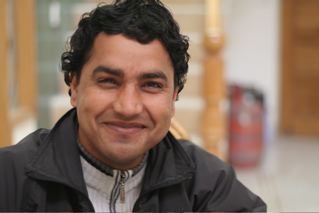 eager person, volunteered to go. The three hour journey took him about six (bad directions), but he screeched into the DM’s office right at four. The meeting started 40 minutes late and was over in just half an hour. The first thing Rizwan heard was a complaint that we never attend the meetings. He explained how the notices either never arrive or arrive after the fact and someone sitting in the back of the room muttered “Appoint a different NGO.”
Exactly. Local committees should be local. For the National Trust to work effectively, it needs to be truly representative of the nation, not only of capitol cities like Dehradun. But the Trust has a genuine problem: organizations from the smaller towns and villages may not even know it exists. And if they do, the paperwork for registration may seem just too daunting. We are hoping to go back to Tehri (and Uttarkashi and Rudraprayag, our other “local” sites) and work with local people to identify good NGOs who can take our place on the committees. With the admin support our Resource Centre can provide, we can help them navigate the registration process and perhaps access some funding as well.
As he was leaving the meeting, Rizwan told us on his return, the DM called him back in. “That’s a dangerous smile you’ve got,” he said. He got that one right. His smile is half the reason he was hired: there’s a world of possibility contained in it. And possibility is what a job in awareness is all about – helping people to imagine that things can be different, that hope is alive, that magic is afoot.

It is true.Uttrakhand does needs to sensitized about special needs. What I have experienced is that people sitting in government offices also have no knowledge about it but are following the written instructions on paper which is an Act or circular.Beyond this they have no idea how it is to be implemented.
First and foremost, the people in the offices need to understand the ‘needs’ and the importance of acts and rules. Only then will they be able to disseminate the required information to the ‘ affected’.
I hope all of us can make an effort in that direction.
Hi! I am thoroughly impressed with your knowledge of Babies. Your insights into this article about Babies was well worth the the time to read it. I thank you for posting such awsome information. Signed James Kryten on this Day Thursday.