Sharmi Guha, art therapist, and aunt of our trainee Sayan Choudhary conducted an art therapy workshop for a compact group of eight parents from our Center for Vocational Training (CVT) on April 12. Sharmi’s forte lies in helping children and adults cope with difficult emotions using art as a release.
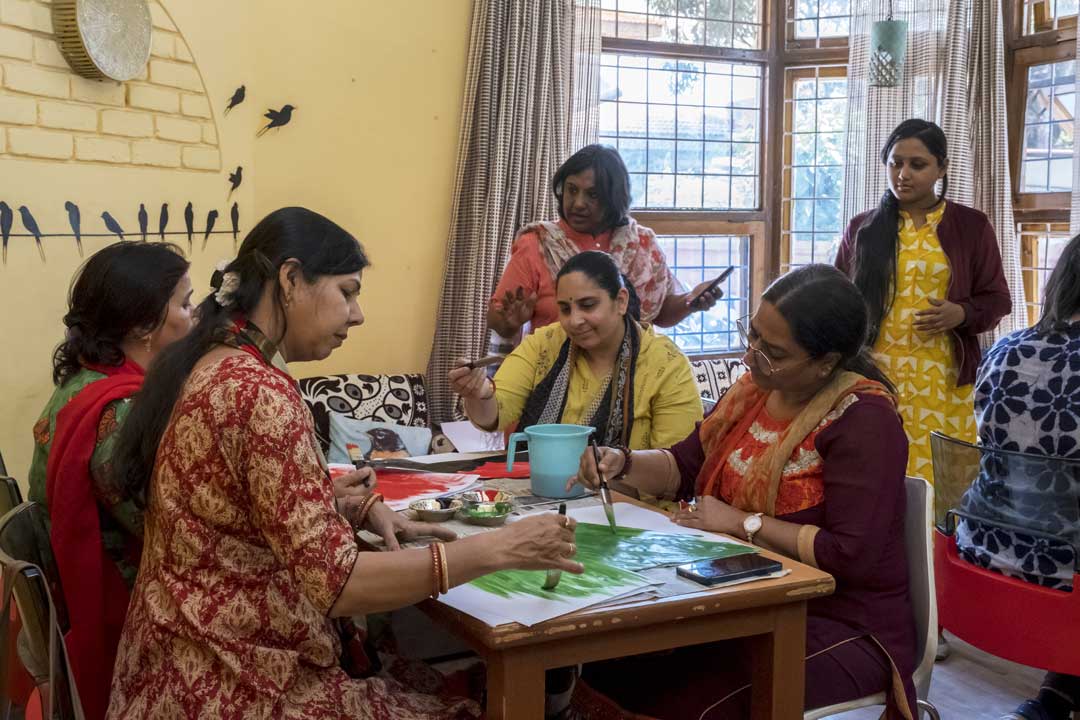
The first half of the session had the participants using dark colors to express and release challenging feelings as soothing music filled the air. Out came splashes of red, black, orange and green. Next, we looked at calming and cleansing by coloring mandalas with cool yellows, pinks and purples to induce feelings of serenity.

Anupama Bhutani, mother of our trainee Lavanya summed up the experience on behalf of the other parents, saying, “The session was very relaxing and I look forward to more of them, especially for Lavanya, who likes painting”. Stay tuned for news of more such workshops in the future!